Episode 25 — The New Delhi Mid-Air Collision on July 6, 1996: The Tragedy Created by ATC Radar Failure
On July 6, 1996, the worst mid-air collision in commercial aviation history occurred above New Delhi, India. Indian Airlines Flight 996, a Boeing 747, collided head-on with Sri Lankan Airlines Flight 614, a McDonnell Douglas MD-11. All 349 passengers and crew members on board perished. The cause was radar failure at the air traffic control center combined with a mismatch in altimeter calibration settings.
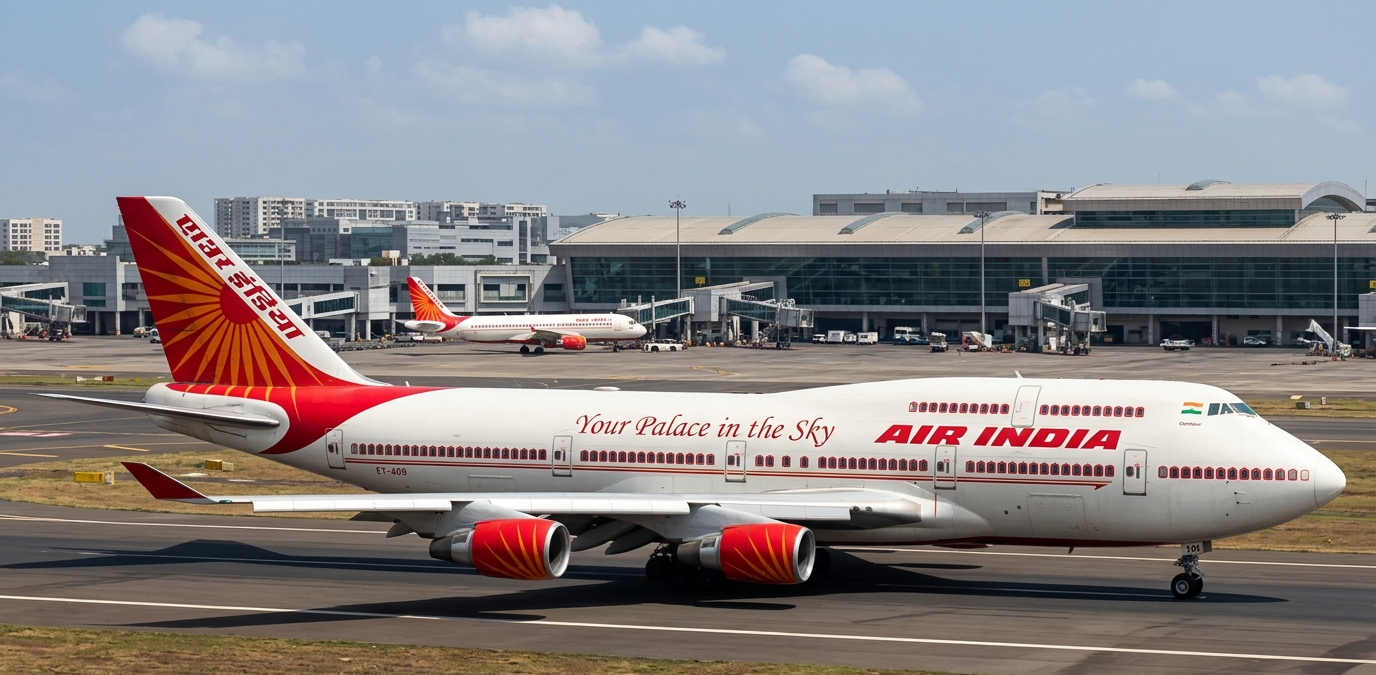
The Airspace That Night, and the Radar's Silence
Indian Airlines Flight 996 was a passenger aircraft traveling from New Delhi to Bangkok. Sri Lankan Airlines Flight 614 was en route from Colombo to Vienna. Both flights had to pass through the airspace near Palam Airport in New Delhi.
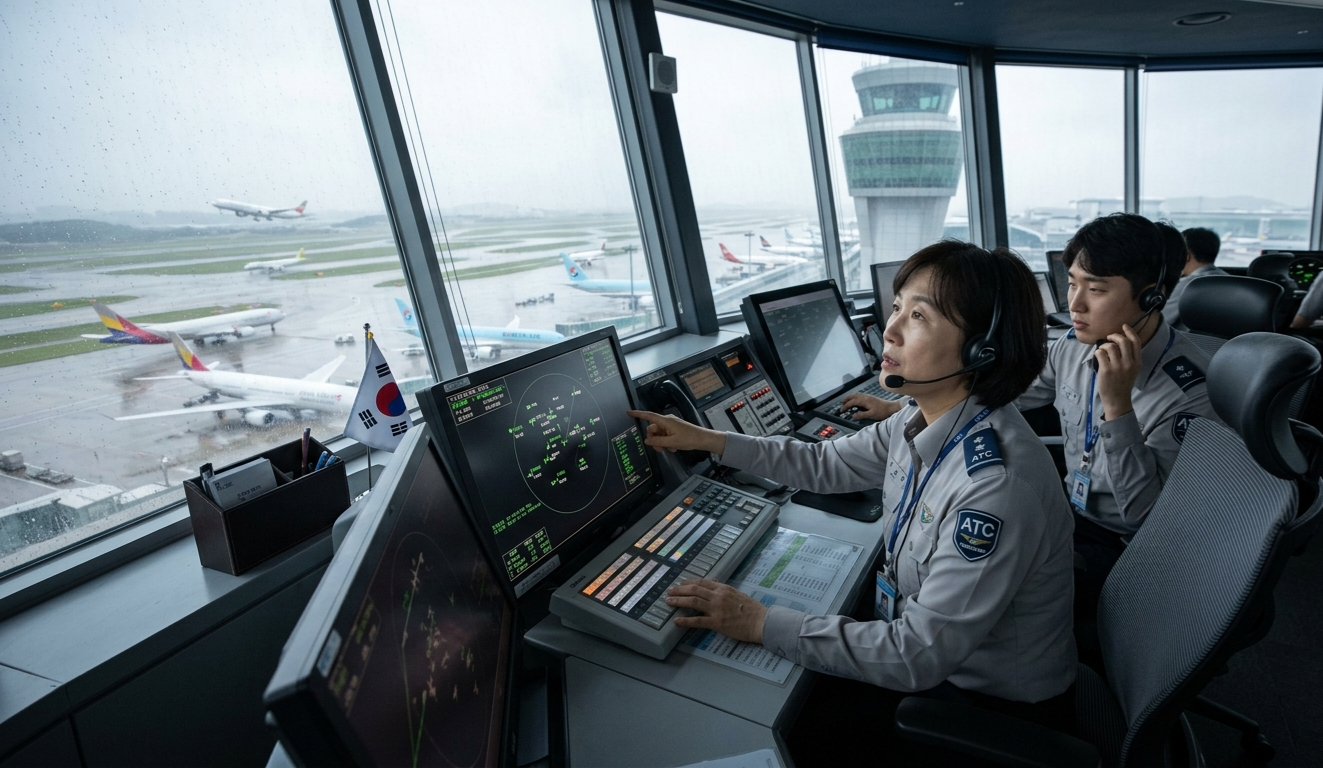
New Delhi's air traffic control center was operated by the Indian Air Force. That night, the radar system failed. Without radar, controllers were forced to manage aircraft using only voice reports from pilots.
"That night, without radar, we had no way to determine altitude. We could only rely on what the pilots told us," a controller later testified after the investigation. Controllers were attempting to maintain aircraft separation using only basic voice communication.
The Controller's Judgment, and the Fatal Error
Indian Airlines Flight 996 was cruising at an altitude of 14,000 feet. Sri Lankan Airlines Flight 614 was descending from 15,000 feet.
The problem lay in altitude readings. The two airlines were likely using different altimeter reference standards. Indian Airlines used one reference, while Sri Lankan Airlines was configured with another. Had radar been operational, the controller could have instantly verified the actual distance between the two aircraft. But there was no radar.
Based on voice reports, the controller assumed the two aircraft were sufficiently separated. Without real-time position tracking, precise distance could not be determined. The two aircraft were steadily approaching each other.
Moments Before Impact: An Unavoidable Collision
The pilot of Indian Airlines Flight 996 spotted lights outside the cockpit window. "Traffic ahead! Climb!" the pilot immediately ordered. But it was already too late.
The two aircraft collided head-on at an altitude of approximately 14,500 feet above southwestern New Delhi at speeds exceeding 560 miles per hour. Their actual altitudes were nearly identical. The right wing of the Indian Airlines 747 struck the right side of the fuselage of the Sri Lankan Airlines MD-11.
Both aircraft became uncontrollable and spiraled downward. Indian Airlines Flight 996 crashed in a rural area approximately 60 miles southwest of New Delhi. Sri Lankan Airlines Flight 614 went down a short distance away. When rescue teams arrived at the scene, they found no survivors. All occupants on both aircraft had perished.
Investigation and Accountability
The accident investigation board identified the cause of the tragedy. The Indian Air Force's radar failure was the direct cause. But there were deeper structural problems.
The investigation report identified multiple failures. First, backup systems in case of radar failure were inadequate. Second, altimeter settings between Indian and Sri Lankan airlines were not standardized. Third, the altitude monitoring procedures at New Delhi control lacked sufficient accuracy.
"Radar is not merely a tool—it is a fence that protects lives. Without it, we can only issue instructions in the dark," said an investigator from the International Civil Aviation Organization (ICAO).
The Indian government immediately replaced the radar system at Palam Airport and completely overhauled air traffic control procedures. India and Sri Lanka began collaborating on altimeter standardization.
The Lessons That Changed the Sky
The deaths of 349 people stemmed from a simple technical failure. Had the radar been operational, had altitude settings been standardized, had backup procedures been complete, this tragedy would never have occurred.
The aviation industry learned from this accident. Redundant radar systems, mandatory collision avoidance systems (ACAS), international standardization. The reason modern aircraft can safely share airspace is because of the lessons that day left behind.
When you fly and see radar imagery on the screen, the numerous systems in the cockpit, and international aviation standards—they are all answers to the question that 349 people asked on July 6, 1996, above New Delhi: "Let this never happen again."
【COMPLETE EPISODE INDEX】
| Episode 1 | Behind the Airport Scenes (Ground Operations) |
| Episode 2 | Secrets of Airport Runways (FAA Standards) |
| Episode 3 | How Aircraft Altitude Works (Pressure Altimeter Mechanism) |
| Episode 4 | Understanding Aircraft Landing Gear Systems |
| Episode 5 | In-Flight Meal Service Systems |
| Episode 6 | Airport Refueling Systems |
| Episode 7 | Airport Baggage Handling |
| Episode 8 | Aircraft Maintenance Inspections |
| Episode 9 | Aircraft Crew Call Systems |
| Episode 10 | Aircraft Ventilation Systems |
| Episode 11 | Aircraft Cabin Lighting |
| Episode 12 | Why Aircraft Windows Are Round |
| Episode 13 | The Secret Behind Aircraft Seat Colors |
| Episode 14 | How Emergency Evacuation Slides Work |
| Episode 15 | Understanding Aircraft Black Boxes |
| Episode 16 | Aircraft Wing Structure and Function |
| Episode 17 | How Oxygen Masks Deploy |
| Episode 18 | Aircraft Emergency Exit Regulations |
| Episode 19 | Aircraft Seatbelt Systems |
| Episode 20 | Aircraft Fire Detection Systems |
| Episode 21 | Takeoff and Landing Checklists |
| Episode 22 | Aircraft Autopilot Systems |
| Episode 23 | How Altimeters Work |
| Episode 24 | Information on Aircraft Control Columns |
| Episode 25 | The New Delhi Mid-Air Collision on July 6, 1996: The Tragedy Created by ATC Radar Failure |
'✈ 비행과 공부 > 가볍게 읽는 글' 카테고리의 다른 글
| GPS 위성과의 교신 — 하늘 위의 신호 (0) | 2026.06.06 |
|---|---|
| GPS Satellites and Communication — Signals from the Sky (1) | 2026.06.06 |
| 25편 — 1996년 7월 6일 뉴델리 상공 충돌 사고: ATC 레이더 고장이 만든 비극 (0) | 2026.06.05 |
| 비행기 조종간의 정보들 — 손 안의 하늘을 조종하는 방법 (4) | 2026.06.04 |
| Understanding the Airplane Autopilot — How Modern Aircraft Fly on Their Own (1) | 2026.06.03 |


댓글