
Executive Summary
On April 17, 2018, Southwest Airlines Flight 1380 experienced catastrophic engine failure at 32,500 feet that resulted in rapid cabin decompression, yet Captain Tammie Jo Shults's composed leadership and the crew's extraordinary response prevented a mass casualty disaster. The accident exposed critical gaps in aviation maintenance protocols that had gone undetected for nearly two decades. This incident became a watershed moment in aviation safety, fundamentally reshaping how the industry inspects and maintains jet engines.
The Perfect Storm: A Routine Tuesday Turns Terrifying
Time: 15:03 UTC (11:03 EDT local time) — April 17, 2018
Southwest Airlines Flight 1380 lifted off from New York's LaGuardia Airport on an ordinary morning. Among the 143 passengers and 5 crew members was Jennifer Riordan, a 43-year-old flight attendant with 20 years of service. She had no way of knowing that in approximately 20 minutes, her life would be forever changed—and that she would ultimately become an unwilling symbol of both human fragility and extraordinary human courage.
As the Boeing 737-700 climbed to its cruising altitude of 32,500 feet, everything seemed routine. The skies were clear. The aircraft was performing normally. Then, something changed.
The First Warning Signs
In the cockpit, Captain Tammie Jo Shults, a 57-year-old retired Air Force pilot with extraordinary composure, detected something wrong. Increased engine vibration. Instrument warnings. First Officer Darren Ellisor confirmed the anomalies. This wasn't a minor glitch—this was the kind of warning that demands immediate action.
The captain immediately began the standard left engine shutdown procedure. But the actual disaster unfolding inside the engine far exceeded what the instruments could tell them.
Inside the Engine: When Metal Fails
The Hidden Flaw
Deep within the left CFM56-7B26 engine, fan blade number 3—a precision-engineered component manufactured between 1998 and 2000—had been quietly accumulating microscopic cracks for years. These cracks originated from a tiny surface defect in the concave fillet region at the blade root, an area that had never been inspected according to routine maintenance procedures.
This was no accident. This was the inevitable consequence of a systemic failure in aviation maintenance standards.
The Fracture
High-cycle fatigue did what physics inevitably demands: the blade fractured. Metal fragments shot outward at tremendous velocity, striking the engine casing with catastrophic force. Some pieces penetrated the casing entirely and rocketed through the cabin wall.
The metal didn't just damage the aircraft—it violated the one sacred boundary that separated the pressurized cabin from the lethal void of the upper atmosphere.
32,500 Feet: When Pressure Becomes the Enemy
Rapid Decompression: The Physics of Terror
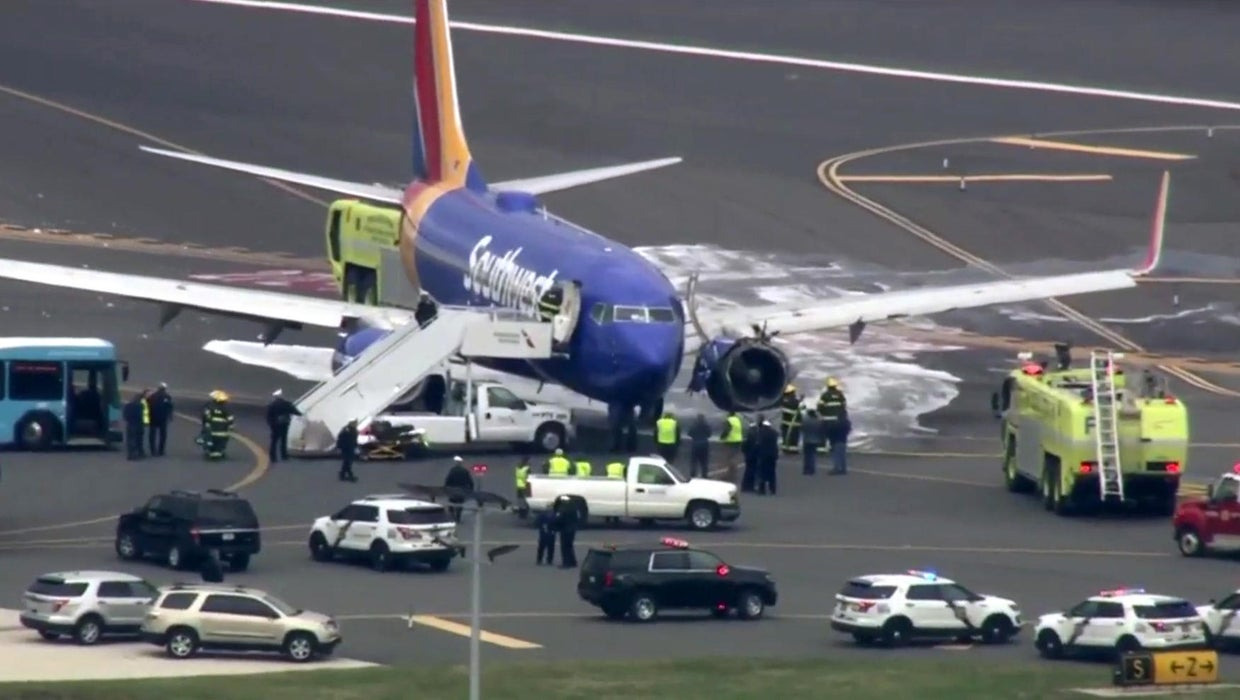
At cruise altitude, the cabin was pressurized to approximately 8,000 feet equivalent—maintaining comfortable breathing and normal physiology for everyone aboard. The reinforced plastic window at seat 14A shattered under the kinetic impact of engine fragments.
In an instant, the pressure differential between the cabin (equivalent to 8,000 feet) and the outside air (equivalent to minus 56 degrees Celsius at 32,500 feet) created a suction force of almost 3,000 pounds of pressure.
Jennifer Riordan was stationed near the damaged window.
The Unthinkable
The cabin pressure pulled Riordan toward the opening with tremendous, relentless force. Her arm and part of her head were exposed outside the cabin window. For those terrifying seconds, she was being physically extracted from the aircraft at 32,500 feet.
But nearby passengers and crew members immediately grabbed her. They pulled. They held. In a spontaneous act of collective human determination, they retrieved her from the brink of death—but not without cost. Riordan sustained severe traumatic injuries to her abdomen and chest.
The Response That Followed
What happened next redefined how we understand human resilience under catastrophic stress.
The cabin filled with panic—understandably so. Oxygen masks dropped automatically. But something remarkable occurred: medical professionals among the passengers voluntarily began rendering aid. A physician and several other passengers provided hemorrhage control and basic first aid measures on the spot. Flight attendants issued oxygen instructions and worked to calm the terrified passengers.
In that chaos, human professionalism and compassion emerged.
In the Cockpit: Leadership Under Impossible Pressure
Single-Engine Operations at Altitude
While the cabin crew managed the medical emergency and passenger panic, Captain Shults faced a challenge most commercial pilots never encounter: operating a large commercial aircraft on a single engine at cruise altitude.
This is not routine. This is not trained regularly. This is the kind of scenario that exists only in the realm of theoretical emergency procedures.
The captain maintained control using manual flight controls, keeping the aircraft stable. Every decision mattered. Every adjustment required precision. One miscalculation could result in a stall, a spin, or a catastrophic loss of control.
The Diversion
The crew made the decision to divert to Philadelphia International Airport (PHL/KPHL), the nearest major airport. Approximately 20 minutes after the initial emergency began, with the aircraft still operating on a single engine and emergency crews standing by, Captain Shults executed a smooth, controlled landing on runway 27L at 11:23 EDT.
The landing was textbook perfect. An aircraft that had just experienced catastrophic engine failure, rapid decompression, and a medical emergency was brought safely to the ground with professional precision.
Everyone on that aircraft owed their lives to that landing.
The Tragedy: Jennifer Riordan
Jennifer Riordan was immediately transported to the hospital. Despite the heroic efforts of the passengers who pulled her back into the cabin, despite the emergency medical care, despite reaching the ground safely—her injuries were too severe.
She did not survive.
At age 43, with 20 years of service as a flight attendant, Jennifer Riordan became the sole fatality of Southwest Airlines Flight 1380. She was a mother, a wife, a professional who had dedicated her career to ensuring the safety of others.
Her death was not inevitable. It was not the inescapable consequence of the engine failure. It was the tragic outcome of a maintenance system failure that had accumulated over nearly two decades.
The Investigation: What Went Wrong?
The NTSB's Findings
The National Transportation Safety Board (NTSB) issued its official accident report in June 2018. The probable cause was unambiguous:
"The fracture of the left engine's fan blade due to high-cycle fatigue during cruise flight. The fracture initiated from a small surface defect in the concave fillet region of the blade root, an area not included in the fan blade borescope inspection procedure."
This single sentence encapsulates a catastrophic failure of aviation maintenance standards.
The Contributing Factors: A System Failure
1. Inadequate Inspection Scope
Routine fan blade inspections examined only the convex surface and body of the blade. The concave surface—particularly the fillet region at the root—was never inspected. This critical oversight meant that multiple high-cycle fatigue cracks from blades manufactured during the same production period went completely undetected.
For nearly 20 years, airlines and maintenance providers had been flying aircraft with ticking time bombs in their engines, completely unaware.
2. Manufacturing Defect
CFM56 engine fan blades manufactured between 1998 and 2000 contained surface irregularities deeper than design specifications. These defects created stress concentration points that initiated fatigue cracking. The blades were defective from the moment they left the factory.
3. Lack of Defect Tracking and Information Sharing
This is perhaps the most damning finding. Southwest Airlines and CFM International failed to adequately connect previous fan blade fracture incidents. Prior to the April 2018 accident, Southwest alone had experienced at least three fan blade fractures.
Three times. The pattern was evident. Yet no one connected the dots. No comprehensive defect analysis was triggered. The industry's information-sharing system failed at the moment it mattered most.
4. Engine Casing Design
The structural design of the CFM56 engine casing was insufficient. It permitted fragments from a fractured fan blade to penetrate and breach the cabin—a design vulnerability that shouldn't exist in modern aviation.
The Lessons: How Aviation Changed
NTSB Safety Recommendations
The NTSB issued two critical recommendations:
- A-18-024: Develop improved inspection procedures for CFM56 fan blades, particularly including the concave fillet surfaces at the blade root.
- A-18-025: Shorten inspection intervals for CFM56 engines.
FAA Response: Airworthiness Directive AD 2018-09-01
The FAA acted with appropriate urgency, establishing inspection and replacement programs for CFM56-7B fan blades. Priority replacement was directed for blades manufactured between 1998 and 2000—the exact blades that had accumulated damage for two decades.
CFM International Actions
CFM International, the manufacturer, revised its fan blade borescope inspection procedures to include the previously-ignored concave fillet surfaces and root areas. They implemented a blade replacement program for affected production batches.
Southwest Airlines Procedures
Southwest Airlines enhanced crew training for cabin decompression scenarios and strengthened education in rapid response and patient stabilization techniques.
What Southwest Flight 1380 Revealed About Aviation Safety
Lesson One: Visual Inspection Has Limits
High-cycle fatigue damage cannot be detected by routine visual inspection alone. Comprehensive inspection standards that include all critical surfaces are essential. The concave fillet region at the blade root is not an obscure corner—it is precisely where fatigue cracks initiate and propagate. It must be inspected.
Lesson Two: Information Sharing Saves Lives
Without industry-wide information sharing and defect tracking systems, the same defects can recur across different airlines and years. Southwest experienced three fan blade fractures before the accident. If that data had been properly shared and analyzed, the pattern would have been obvious. The fourth fracture—the one that killed Jennifer Riordan—might never have happened.
Lesson Three: Human Performance Under Crisis
The extraordinary performance of Captain Shults, First Officer Ellisor, the flight attendants, and the passengers demonstrated something profound: when trained professionals and ordinary people face catastrophic circumstances with composure and determination, the outcome can be vastly different from what physics and statistics might suggest.
A well-trained pilot's composure, passenger cooperation, and prompt first aid—these saved 148 lives on April 17, 2018.
The Numbers: What Survived, What We Lost
- Occupants: 143 passengers + 5 crew members
- Fatalities: 1 (Jennifer Riordan)
- Serious Injuries: 7
- Minor Injuries: 81
- Critical Survival Rate: 99.3%
Consider the alternative. Consider what could have happened if the window had been larger. Consider what would have happened if the pilot had been less experienced, if the cabin crew had panicked, if the passengers had not acted with immediate compassion.
The survival of 148 people was not inevitable. It was the result of countless small decisions and extraordinary human performance.
Conclusion: Aviation Safety Continues to Evolve
Southwest Airlines Flight 1380 was not a story of inevitable disaster averted by luck. It was a story of system failure exposed by catastrophe, and an industry's determination to ensure the failure never happens the same way again.
Jennifer Riordan's death was not in vain. Her sacrifice prompted the aviation industry to examine its inspection procedures, its information-sharing protocols, and its maintenance standards with renewed urgency.
Today, CFM56 fan blades are inspected more thoroughly. Inspection intervals are shorter. Defect data is better tracked and shared. The engine casings have been redesigned. Pilots and cabin crews receive enhanced training in emergency decompression scenarios.
Aviation remains one of the safest forms of transportation—and incidents like Southwest Flight 1380 remind us why. Each accident becomes a teacher. Each tragedy becomes a catalyst for change.
The next time you step aboard a commercial aircraft, you benefit from the lessons learned on April 17, 2018. You benefit from Captain Shults's professionalism. You benefit from the courage of the passengers who pulled Jennifer Riordan back from the brink. You benefit from an industry that takes every accident seriously and transforms every lesson into safety improvements.
That is the legacy of Southwest Airlines Flight 1380.
📋 References & Sources
- NTSB Aircraft Accident Report AAR-18-02: "Southwest Airlines Flight 1380, Boeing 737-700, N8632B, Philadelphia International Airport, April 17, 2018" — https://www.ntsb.gov/investigations/AccidentReports/Reports/AAR1802.pdf
- NTSB Docket DCA18MA145: https://data.ntsb.gov/Docket?ProjectID=95285
- FAA Airworthiness Directive AD 2018-09-01 (CFM56-7B Fan Blades)
- CFM International Service Bulletin CFM56-35-1-36: "Fan Blade Inspection and Replacement" (Revised June 2018)
- Aviation Safety Network Database: https://aviation-safety.net/database/record.php?id=20180417-0
'✈ 비행과 공부 > 항공사고' 카테고리의 다른 글
| A Hole in the Sky: The Alaska Airlines Flight 1282 Door Plug Incident (1) | 2026.05.16 |
|---|---|
| 비행 중 동체에 구멍이 뚫렸다: 알래스카항공 1282편 도어 플러그 이탈 사고 (0) | 2026.05.16 |
| Tragedy Over the Potomac: America's Worst Midair Collision in the 21st Century (0) | 2026.05.14 |
| 포토맥 강 위의 비극: 미국 항공 역사상 최악의 공중충돌 (0) | 2026.05.14 |
| 저먼윙스 9525편 추락 사고 - 최악의 항공 사고 및 자살 (2) | 2020.11.23 |


댓글